

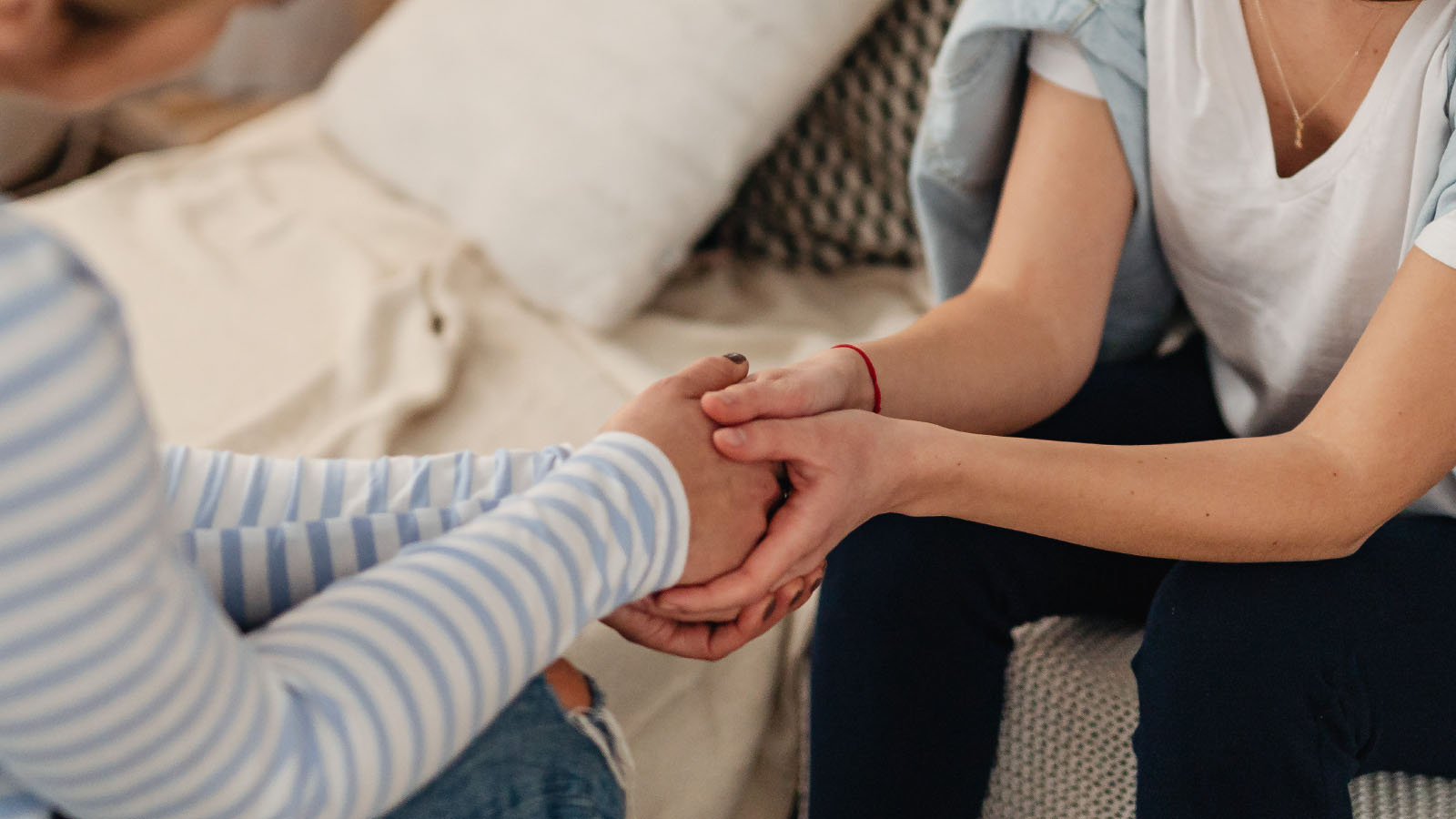
Along with the expansion of our Max Block Food Pantry, Child Safety Services, and Mental Health Counseling into Baker County, JFCS offers help for those experiencing domestic violence, so survivors can get the support they need within the community.
Domestic violence doesn’t discriminate by age, race, gender, income or community. It can happen between a man and a woman, two men, two women, siblings and even between parents and children. Florida’s certified domestic violence centers received 74,381 crisis hotline calls during fiscal year 2024-2025, according to the Florida Department of Children and Families. More than 31,000 individuals received outreach services and another 12,425 received emergency shelter.
But what happens to survivors who never get help, or who don’t have the resources to seek it? The truth is that we don’t know. Research published in January 2026 shows that rural domestic violence services have long been limited by geographic isolation, lack of transportation and limited access to legal, housing and health services.
Distance matters. Baker County covers about 589 square miles and had an estimated 29,737 residents in 2025, which works out to almost 51 people per square mile. The County has fewer stores, fewer competing businesses and fewer choices for nearly everything, including services.
For someone trying to escape violence, a trip to a shelter takes a car, time off work and a reason to be gone. That can present huge obstacles for a survivor whose partner controls the vehicle or the schedule.
Research shows that intimate partner violence (IPV) outcomes are worse when services are scarce. IPV-related hospitalizations are greater in rural areas, which suggests survivors have trouble getting preventive services before violence escalates. Areas with few services see higher levels of IPV-related homicide.
Small towns also have a characteristic often overlooked. While close ties are one of the strengths of a small community, they can also make it harder for people to ask for help. Relationships run deep, making confidentiality hard to come by. There can be a stigma around admitting abuse, especially if the only person who can help personally knows the abuser.
No matter the barrier, JFCS is here to help right here in Baker County. Since last year, JFCS has offered completely confidential domestic violence services through its Macclenny office, working with victims after they have already left their abuser to help them rebuild their lives.
“When we first expanded our services in Baker County in 2025, we realized there was an additional need to support domestic violence survivors. By giving them access to specialized DV support and other resources, we can put them on the path to a safer, better life.” — Colleen Rodriguez, CEO, JFCS
Working with survivors navigating a new life after an abusive relationship takes time, patience and trust. Each survivor is treated with dignity and respect, starting with an at-home visit from the domestic violence services coordinator. There, the coordinator works with the victim to make a plan for life after the relationship.
This includes financial assistance to help a victim get caught up on bills, since many go from a two-income household to one income, or down payment assistance to relocate entirely. The coordinator also connects victims to job search support, the JFCS food pantry and other county resources. Throughout the process, JFCS follows a curriculum covering skills like budgeting to prepare victims for life on their own. The goal is to make each victim self-sufficient and help them regain their self-esteem.
Safety should not depend on a zip code. While most survivors find their way to JFCS through a referral, if you or someone you know lives in Baker County and are in need of assistance, contact Dawn Jackson at (904) 609-0835 or djackson@jfcsjax.org.
——–
JFCS is honored to serve in this important work, alongside our community partners at Hubbard House.